
The End of GPS as a Reliable Default
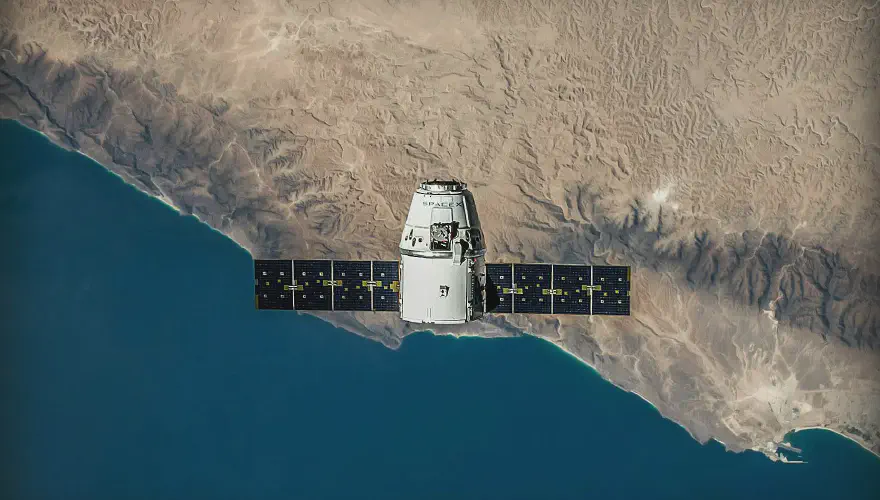
Most people treat “GPS” as a fact of nature. It quietly powers modern life: vehicle navigation, smartphones, parcel logistics, surveying, outdoor sports, precision agriculture, and much more. In practice, what we depend on is not just GPS, but GNSS—Global Navigation Satellite Systems—an umbrella that includes GPS (U.S.), Galileo (EU), GLONASS (Russia), and BeiDou (China).
Like the early internet, GPS was built for military use. Once opened to civilian applications—and once accuracy restrictions were removed—satellite navigation became a default dependency across economies and security systems.
The idea behind satellite navigation is conceptually simple: satellites broadcast their position and a precise timestamp via coded radio signals; receivers compute their own position from signal travel time. The original GPS architecture placed satellites across six orbital planes at an altitude of roughly 20,200 km. Today, GPS maintains more than the minimum required constellation for global coverage, but the underlying physics hasn’t changed: the signals arrive at Earth extremely weak.
For decades, we treated GNSS as reliable infrastructure—not as a contested system. War in Europe and broader electronic warfare realities force a more uncomfortable question:
Should modern military and security planners continue treating GNSS as a reliable primary dependency for navigation and timing—or shift toward alternative, multi-layered systems designed to operate without it?
This essay is not about nostalgia or theory. It is about what needs to change in strategy and technology to stay effective when satellite navigation is degraded by design.
Why This Decision Exists Now
GNSS is usually invisible—until it fails. Natural events such as solar activity can degrade signals, briefly reminding people that a satellite-and-ground network is doing real work. Recent conflicts reveal a deeper and more persistent problem: GNSS disruption is no longer exceptional. In many regions it is routine.
Ukraine made this unavoidably clear. Jamming is cheap, widely available, and tactically useful. Interference maps and incident reports also show sustained disruption in parts of Eastern Europe and the Black Sea region. The basic mechanism is straightforward: a jammer transmits powerful radio noise on or near GNSS frequencies, overwhelming the weak satellite signals and preventing receivers from extracting usable data. More advanced approaches include spoofing—feeding a receiver plausible-looking signals that produce the wrong position or time.
Civilian and military systems are also deeply entangled. GNSS supports not only weapons and drones, but logistics, aviation, shipping, telecom networks, and supply chains that militaries depend on. The question is no longer whether GNSS can be disrupted. It is whether continuing to treat it as a reliable default is strategically justified.
The Assumptions Behind GNSS Dependence
One common assumption is that GNSS may degrade but remains “usable enough,” and that resilience can be achieved mainly through tactics and hardening rather than strategic redesign. Another assumption is that denial will not be sustained everywhere, all the time.
There is some truth here—but it misses a key point: even non-adversarial systems can unintentionally threaten availability. The 5G rollout in the United States in early 2022 illustrated how concerns about adjacent-band interference and high-power transmissions can become a real operational issue for sensitive receivers. Regardless of the specifics, the broader lesson is uncomfortable: GNSS fragility is not only a wartime problem. It is a systems problem.
The Core Vulnerability (GNSS as a Single Point of Failure)
GNSS signals were never designed for today’s breadth of dependence. The satellites are far away and the signals are extraordinarily weak by the time they reach Earth. Even if next-generation satellites increase signal power—or future systems move to lower orbits—the fundamental issue remains.
GNSS is not just a sensor. It is a systemic coupling: a shared dependency that ties together navigation, timing, coordination, and infrastructure across civilian and military domains. Hardening can reduce disruption. It cannot remove the dependency risk—which is the real strategic threat.
If GNSS vanished for 72 hours, one of the first visible failures would be civilian navigation. Phone and car navigation would degrade or fail, affecting mobility and daily operations. That ripples quickly into shipping and delivery, from industrial logistics to consumer goods. Many drivers no longer carry maps or routinely navigate without turn-by-turn guidance.
Maritime and aviation sectors typically retain stronger procedural resilience through charts, procedures, and redundant instruments—but degraded navigation would still impact routing, efficiency, and safety margins. Militaries would feel the effects through logistics and coordination: the lifeline that keeps forces supplied and synchronized.
And it is not only position. GNSS also provides timing and synchronization, creating dependencies across telecommunications, finance, energy grids, and industrial systems. A useful overview is NIST’s report on the economic benefits of GPS (which also describes broader timing reliance): Economic Benefits of the Global Positioning System (GPS).
Evidence From Modern Conflict & Exercises
Warnings and incidents are increasingly public. The Swedish Maritime Administration has warned of interference in the Baltic Sea: “For some time now, the signals have been affected by interference, which means that the system’s position cannot be trusted.” Reports of disruption have also emerged in the Black Sea region, including accounts from civilian aviation.
The evidence is not limited to Europe or to active war zones. In the Pacific, South Korea has invested in land-based backups such as eLoran (enhanced long-range navigation), partly to mitigate jamming risks from North Korea.
In response to the threat, NATO, the EU, and national agencies have begun incorporating GNSS-denial scenarios into training and exercises:
-
NATO’s Trident Juncture (2024)1: 72-hour GNSS blackout for land-air-sea joint operations in Norway
-
Germany–Poland “DIGITAL NIGHT” exercise (2025)2: simulated cross-sector outage affecting telecoms, finance, and power-grid operations
The False Comfort of “GNSS Plus Backup”
Many institutions acknowledge the problem yet default to incremental fixes: better antennas, better filters, better receivers, better procedures. Those improvements matter—but they often keep GNSS as the root dependency.
The United States illustrates the gap between awareness and action. Despite long-standing recognition of GNSS timing risks and policy pressure to establish robust terrestrial backups, the U.S. still lacks a comprehensive nationwide alternative. Bureaucratic inertia, insufficient funding, and competing priorities have left critical infrastructure exposed—while peer competitors have invested in non-space alternatives.
At the same time, even diversification within space-based navigation is not guaranteed. The U.S. Space Force ended an exploratory effort to add smaller, lower-cost navigation satellites to strengthen the GPS constellation, reports SpaceNews. The Resilient GPS (R-GPS) program began in 2024 as part of a broader push to diversify architectures amid concerns about interference and attack.
Europe is exploring multiple approaches. One notable effort is DLR’s AIR-MoPSy study, linked to terrestrial “R-Mode” (Ranging Mode) development, which aims to provide position and timing in maritime environments during GNSS interference. See DLR’s Institute for Solar-Terrestrial Physics: DLR Institute for Solar-Terrestrial Physics.
France and the United Kingdom are also cooperating on backup options. One system under consideration is eLoran, a terrestrial, low-frequency system (90–110 kHz) generally considered harder to block than satellite signals.
The point is not that any single backup is “the answer.” The point is that backups layered on top of a GNSS-centric doctrine still leave the original coupling intact.
What Replaces GNSS
No single technology replaces GNSS. That framing is itself a leftover from an era when satellite navigation was treated as a universal solution. What replaces GNSS as a default is an architecture: a layered Positioning, Navigation, and Timing (PNT) stack designed to survive partial failure.
Each layer compensates for the others. None is sufficient alone.

Photo by Barnabas Davoti
Inertial navigation (INS) is the most mature non-radio alternative. Using accelerometers and gyroscopes, an INS estimates motion without external signals. It is immune to jamming and spoofing—but it drifts. Errors accumulate over time, turning minutes into meters and hours into kilometers. INS is best used as a bridge: carrying systems through denial until another reference can correct it.
Terrain- and vision-based navigation uses the environment as reference. Cameras, lidar, radar, and stored maps can localize a vehicle by matching observed features to known terrain. This has advanced rapidly through autonomy research. Its strengths are independence from GNSS and high accuracy in rich environments. Its limits are context: low visibility, featureless terrain, degraded maps, and heavy compute requirements. It also raises a new class of security problem: protecting map integrity and preventing adversarial deception.
Signals of opportunity exploit the radio noise of modern civilization: cellular towers, TV broadcasts, Wi-Fi, satellite downlinks. These signals were not designed for navigation but can provide positioning or timing cues. The advantage is resilience through abundance—an adversary must suppress many unrelated systems to eliminate them. The drawback is variability: availability and precision differ by region and scenario.
Cooperative / networked positioning shifts the goal from absolute location to shared situational awareness. Units exchange estimates, observations, and confidence levels, allowing the network to converge on a coherent picture even when individual nodes are uncertain. This improves robustness but increases reliance on communications, authentication, and trust models—and creates new failure modes when the network degrades.
LEO PNT concepts aim to reduce the fragility of GNSS by shortening distance between transmitter and receiver. Stronger signals and faster-moving satellites can make jamming and spoofing harder. But this introduces new dependencies: larger constellations, commercial operators, and rapid orbital churn. It can improve resilience, but it does not eliminate contestability.
The pattern is consistent: capability improves, but complexity increases. Designing for denial means accepting that navigation becomes probabilistic and system-dependent rather than absolute.
Resilience comes from diversity, not superiority.
Second-Order Effects & New Risks
Moving away from GNSS-centric design trades one class of risk for several others. Ignoring those second-order effects would repeat the same mistake that turned GNSS into a single point of failure.
First, system complexity rises sharply. A heterogeneous PNT stack is harder to design, integrate, test, and maintain. Failure modes multiply, interactions become less intuitive, and troubleshooting becomes harder under field conditions. “GNSS lost” stops being a single alert and becomes a diagnosis problem: which layer failed, why, and what the current confidence should be.
Second, trust and verification become central. GNSS provided a globally consistent reference. Multi-source navigation produces estimates with uncertainty bounds and hidden correlations. Operators must learn to reason in probabilities, not certainties. That is a cultural shift as much as a technical one.
Third, autonomy and control move into tension. Systems that can operate without GNSS often rely more heavily on onboard inference and decision-making. That improves survivability but reduces transparency. When navigation is inferred rather than received, explaining why a system believes it is at a location becomes harder—especially under time pressure.
Fourth, training and doctrine become the bottleneck. Many operators were trained in an era where GNSS was “always there.” Relearning degraded operations and cross-checking methods takes time, repetition, and institutional seriousness. Without it, advanced systems risk being misunderstood, misused, or ignored.
Finally, civil–military divergence becomes a real risk. Militaries may harden and diversify faster than civilian infrastructure—or vice versa. If civilian logistics, aviation, and telecom remain GNSS-dependent while military systems move on, shared operations become brittle.
Resilience cannot be siloed.
These risks do not argue against change. They argue against naïve change.
Decision Options on the Table
At a strategic level, the choice is not whether to abandon GNSS, but how to treat it.
Option A: Continue GNSS-Centric Doctrine with Hardening
GNSS remains the primary reference, augmented by better antennas, encrypted signals, anti-jam techniques, and limited backups.
- Costs: relatively low in the short term
- Risks: dependency remains; adversaries retain leverage
- Cultural resistance: minimal
- Timeline: immediate
This optimizes for continuity, not resilience.
Option B: Treat GNSS as Conditional, Design for Denial
GNSS is treated as available sometimes, but never guaranteed. Systems are designed to degrade gracefully and continue operating under partial loss.
- Costs: moderate, spread across training, integration, and doctrine
- Risks: increased complexity; slower initial performance in some contexts
- Cultural resistance: medium
- Timeline: 5–10 years
This reframes GNSS from foundation to contributor.
Option C: Radical Re-Architecture Toward Heterogeneous PNT
GNSS becomes only one layer among many. Procurement, doctrine, and system design shift toward multi-source positioning and timing by default.
- Costs: high, front-loaded
- Risks: integration failure; institutional friction
- Cultural resistance: significant
- Timeline: 10–20 years
This maximizes long-term resilience, but demands patience and political will.
None of these choices is painless. Pretending the decision does not exist is itself a decision—with predictable consequences.
Signals to Watch
The core issue is doctrinal lag. Established methods often assume GNSS will return soon, creating a dangerous default: “wait for it to come back” instead of “operate without it.”
Across NATO-aligned countries, doctrine is shifting from satellite dependence toward satellite resilience.
Since 2023, every Finnish conscript has been trained in terrain navigation, celestial techniques, and GNSS-outage drills. Finland’s defense doctrine 3 treats PNT denial as a baseline condition in any conflict scenario involving Russia.
German Air Force and Army exercises increasingly include GNSS-denied scenarios in simulators and manoeuvres using electronic warfare simulation. Commanders report that many junior officers are being exposed to pre-GNSS tactics for the first time in their careers.
This shift is visible in civil aviation as well. Ryanair, Finnair, and LOT Polish Airlines now mandate GNSS-denied training in recurrent simulator checks. Pilots are briefed pre-flight on potential GNSS degradation zones (e.g., Baltic airspace and FIR overlaps near Kaliningrad).
“Flying a non-precision approach from raw data used to be an exercise. Now it’s insurance.” — Senior pilot trainer, Lufthansa Technik, 2025
The Judgment
While institutional awareness is growing, public understanding remains low. Few citizens know what GNSS is, how dependent phones, cars, and services are on it, or what to do during disruption. Public awareness campaigns are a good first step—but they are only a step.
GNSS should no longer be treated as a reliable default. It should be assumed degraded, contested, and conditional—and system design should reflect that reality.
The age of absolute satellite-navigation trust is over. Whether through intentional disruption, collateral interference, or natural degradation, satellite signals will not always be available. Europe’s response has begun—but it needs to accelerate.
From retraining armed forces and refreshing pilot skills to hardening critical infrastructure and updating policy, the shift toward a resilient PNT culture is underway. The next requirement is coordination—and acceptance that denial is not an edge case, but a recurring condition.
-
https://shape.nato.int/news-archive/2024/natos-largest-exercise-in-decades--steadfast-defender-2024--set-to-get-underway ↩︎
-
https://news.liga.net/en/politics/news/nato-countries-begin-military-exercises-to-deploy-military-equipment-and-units-to-lithuania ↩︎
-
https://www.businessinsider.com/finnish-soldiers-training-with-maps-operate-environments-gps-denial-2025-6 ↩︎